How much a school backpack should weigh, and how to check it in a kitchen
Fifteen per cent of the child is the number two professional bodies keep repeating. What it works out to at six, at ten and at fifteen, how to measure it with a bathroom scale in under a minute, and what actually comes out of the bag when it is over.

The number, and the two bodies that keep repeating it
Fifteen per cent. That is the whole of the guidance, and it has survived twenty years of school bags getting bigger because it is the one number that scales with the child instead of with the bag. The American Academy of Pediatrics puts the ceiling for a packed school bag at fifteen per cent of a child's body weight, and gives one worked example so nobody has to interpret it: a hundred-pound child, a fifteen-pound bag. The American Academy of Orthopaedic Surgeons arrives from the other direction, through the muscles and joints that take the load, and lands on the same list of things a bag needs.
What both bodies ask for is unremarkable and worth writing out, because half of it is invisible in a photograph. Two broad padded shoulder straps, adjustable, kept even in length. A padded back. A waist belt or a chest strap. Separate compartments, so that a weight cannot collect in one corner. The orthopaedic guidance adds a fourth thing that the marketing rarely mentions: start from a lightweight bag, because every ounce the bag weighs empty is an ounce the child carries before a single book goes in.
There is also a warning in the paediatric guidance that sits oddly next to the way school bags are sold. More padding does not translate to less pain. A thick foam panel photographs beautifully and does not change the arithmetic, and neither does a mesh back, a moulded frame or anything else that arrives in a product description. The load is the load.
The other line worth keeping is about size. A bigger bag is not a better bag, because the extra room gets filled: by a second water bottle, by the book that could have stayed in the locker, by the trainers that will not be needed until Thursday. That is why the heights on this site matter more than the litres, and why buying two sizes up to get another year out of a bag tends to cost more than it saves.
What fifteen per cent works out to at six, at ten and at fifteen
The rule is easy to state and slightly harder to feel, so it helps to do the multiplication once and keep the answer somewhere. Take the child's weight and multiply by 0.15. A sixty-pound child is carrying nine pounds at most; an eighty-pound child, twelve; the hundred-pound child of the guidance, fifteen; a hundred-and-twenty-pound teenager, eighteen.
Nine pounds sounds generous until you weigh a hardback textbook. It is not generous. A single water bottle, filled, is a serious fraction of it, because a litre of water weighs about a kilogram, which is about 2.2 pounds, so a full litre bottle takes a quarter of a small child's whole allowance before anything else goes in the bag.
Water is the one weight everybody can picture, which makes that conversion worth keeping. Nine pounds is a bit over four litres. Twelve pounds is five and a half. Eighteen pounds is more than eight litres of water on a fifteen-year-old's shoulders, which is a great deal more than it sounds when it is written as "eighteen pounds".
| Child weighs | Fifteen per cent is | About the same as | Which is roughly |
|---|---|---|---|
| 60 lb | 9 lb | 4.1 litres of water | Four large bottles |
| 80 lb | 12 lb | 5.5 litres of water | Five and a half |
| 100 lb | 15 lb | 6.8 litres of water | Nearly seven |
| 120 lb | 18 lb | 8.2 litres of water | Eight and a bit |
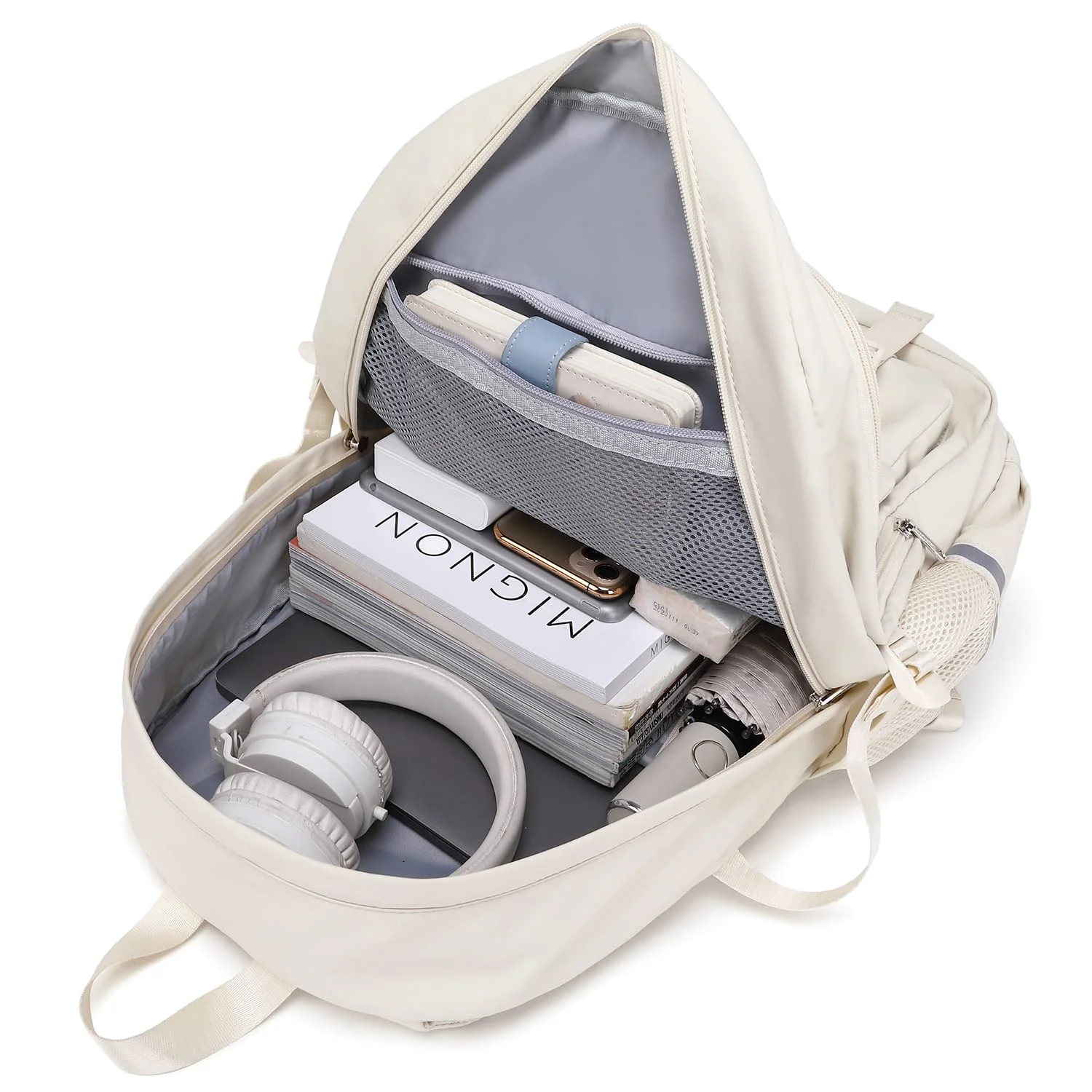
Do not read those weights as ages. A six-year-old and a ten-year-old can sit anywhere on that table, and the only figure that matters is the one on your own scale. What the table is for is the second column: once you know that your child's ceiling is nine pounds rather than fifteen, the argument about the second textbook stops being an argument and becomes arithmetic.
Weighing a bag without a special scale
You do not need a luggage hook or a kitchen scale with a bag hanging off it. A bathroom scale gives the answer in about forty seconds, and the trick is subtraction rather than measurement.
Stand on the scale and read the number. Step off, pick up the packed bag, stand on it again, and read the number a second time. The difference is the bag. A digital scale that rounds to the nearest half pound is accurate enough for the decision you are making. So is an old analogue one, because you are not looking for two decimal places. You are looking for whether the bag is over nine pounds or under it.
A few small things make the reading behave. Put the scale on a hard floor rather than on a bathmat, which absorbs enough to matter. Hold the bag against your chest rather than out in front of you, so you are not fighting to stay balanced while the display settles. And weigh the bag as the child actually carries it on a Wednesday, with the water bottle full and the gym kit in, rather than as it stands empty on a Sunday evening.
If it is easier, weigh the child instead and do the multiplication. Sixty-two pounds times 0.15 is 9.3, and now you have the ceiling written down. Either route arrives at the same place, and the useful habit is to do it in the first week of September, again after the October half term when the timetable changes, and then only when something feels wrong.
The test that needs no scale at all
The paediatric guidance offers a check that needs nothing but a doorway to stand in. If the child leans forward to support the bag, the bag is too heavy. That is it. A loaded pack pulls backwards, and a body that cannot resist it compensates by tipping the shoulders and the head forward until the weight comes back over the feet.
Watch that from the side rather than from the front, because from the front it is nearly invisible. Ask the child to put the bag on unaided and walk ten steps away from you. A slight forward tilt from the hips, a chin that comes out ahead of the chest, a shuffle rather than a stride: any of those means the same thing as a number over the ceiling, and it means it whatever the scale said.
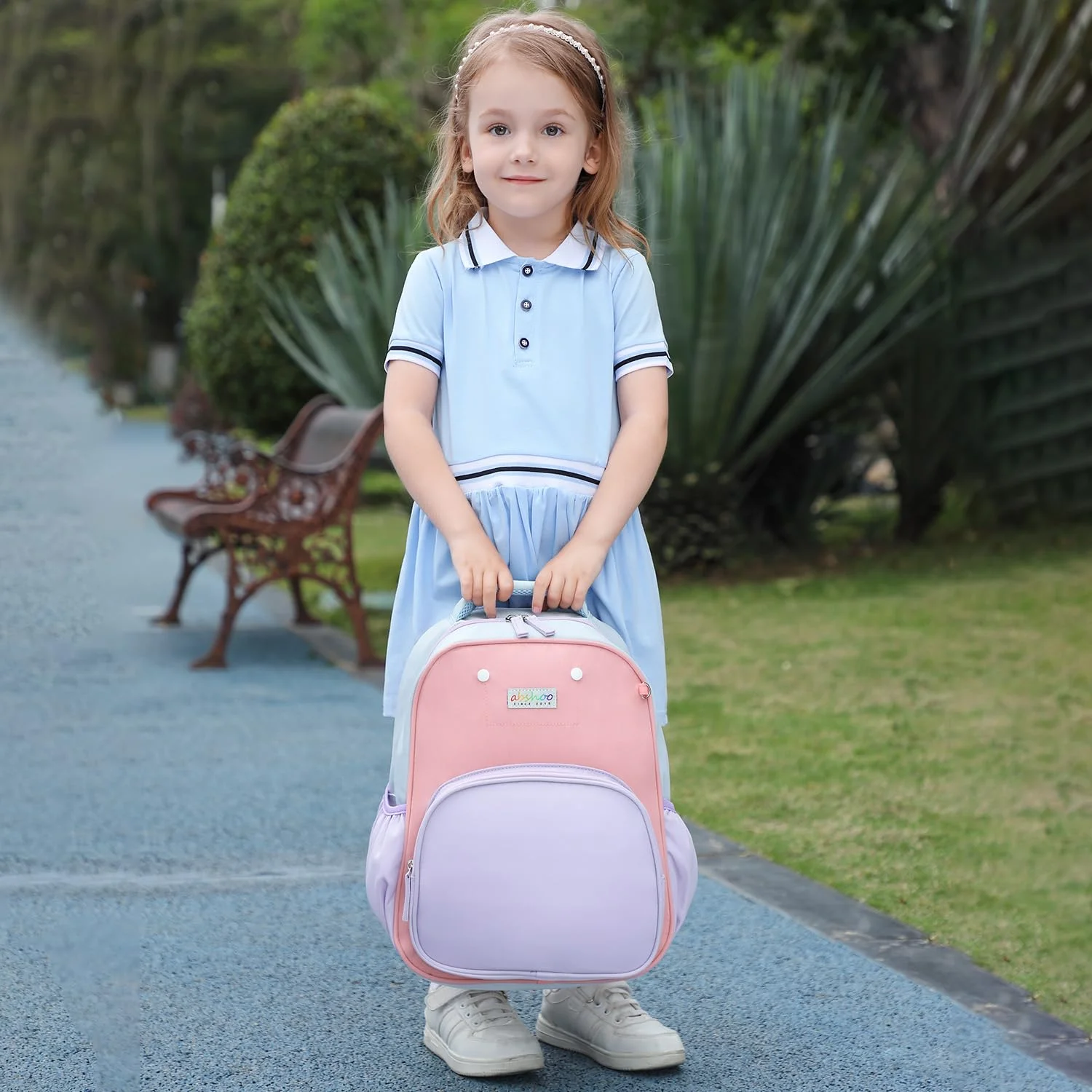
There are two other signs that cost nothing to look for. One is the child who cannot lift the bag onto their own shoulders without swinging it. The other is the strap that comes off one shoulder within a hundred yards, which is not always a weight problem. It is often a strap problem, and the chest strap on five of our nine kids' backpacks exists precisely for it. A bag that is both heavy and sliding is a bag being carried on one shoulder, which is the worst of the available options.
Take pain seriously and immediately. The orthopaedic guidance is plain that a backpack used badly injures muscles and joints, and that the result is back, neck and shoulder pain. Pain is not a sign that a child needs to toughen up; it is a sign that something needs to come out of the bag today, and it is worth saying that to a teenager who has decided that complaining is worse than aching.
What comes out of the bag first
When the bag is over, the question is not what to remove but what to remove first, and the answer is nearly always paper. Textbooks are the heaviest single category in a school bag by a distance, and they are also the category with the most alternatives: a second copy left at home, a chapter photographed on a phone, the book that belongs to Thursday's lesson rather than Monday's.
Start with an audit rather than a purge. Empty the bag onto a table on a Friday and put each thing in one of three piles: needed every day, needed on named days, and no longer needed at all. The third pile is usually larger than anybody expects, because a school bag accumulates. Old worksheets weigh nothing individually and a great deal collectively, and a bag that has not been emptied since September is carrying October around in November.
Water is the weight people forget, because a bottle feels like nothing when it is empty. A full litre is 2.2 pounds. If the school has a tap or a fountain, a half-litre bottle refilled at break saves a pound and a bit every day without a single sip of difference, and on a nine-pound ceiling a pound is more than ten per cent of the whole allowance.
Lunch is the other quiet weight. A rigid thermos with a metal shell and a dense packed lunch will outweigh the same food in a soft insulated bag, and a piece of fruit is heavier than most people guess. None of this is a reason to send a child out hungry. It is a reason to know where the pounds actually are before you start arguing about a pencil case.
If the bag is still over after all of that, the guidance itself offers the exit: consider a bag with handles, or a rolling bag, if the school allows one. Plenty of schools do not, and it is worth asking rather than assuming.
Where the heavy things go once the bag is packed
Position changes what a weight feels like, and it is free. Both bodies say the same thing: the heaviest items go closest to the body, low, in the curve of the lower back. A textbook against the back panel and a textbook against the outer face of the bag weigh the same on a scale and do not feel the same at all, because the further the mass sits from the spine, the harder the body has to work to stop it tipping backwards.
Load it in that order deliberately. Laptop or the biggest book flat against the back panel first; the rest of the books on top of it; soft things, a fleece or a gym kit, in the outer half where their bulk costs nothing. Keep left and right even, which is the reason the paediatric guidance asks for separate compartments in the first place. A bag with one side pocket full of a bottle and the other empty is a bag pulling a child sideways for the length of a school run.
Two habits undo all of this. The first is the bag carried by the top handle, which turns a two-shoulder load into a one-arm load. The second is the strap slackened off so the bag hangs at the bottom of the back, which is the fashion in most schools and moves the whole mass away from the hips. A bag should sit against the back with its base at about the level of the waist, and the tightening takes four seconds.
What a strap can do, and what it cannot
A chest strap is a webbing band with a clip that runs between the two shoulder straps. Its job is narrow and it does it well: it stops the straps sliding outwards off narrow shoulders, which keeps the load on both shoulders instead of one and keeps the bag against the back instead of swinging. Both bodies list a chest or waist strap among the features to look for, and on a small child it does more good than any amount of foam.
A waist belt does something different. It transfers part of the load from the shoulders to the hips, which are better at carrying it, and that is why the orthopaedic guidance asks for one specifically when the load is heavy. On a school bag it is usually a light webbing band rather than the padded belt of a hiking pack, and it will move some of the weight rather than most of it.
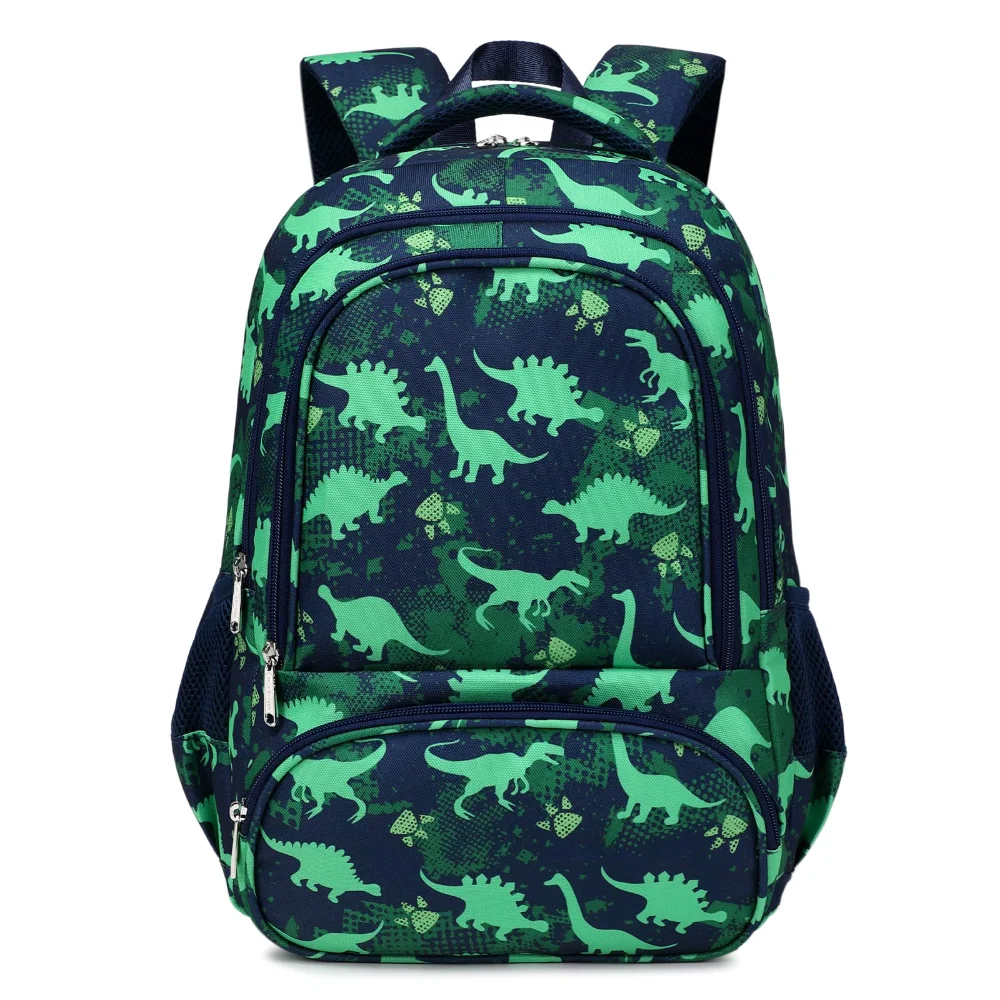
Fifteen pounds of textbooks does not become fourteen because the straps are wider.
What neither of them does is make a heavy bag light. This is the sentence that a shop should say out loud, so here it is: no strap, panel, belt or frame sold by us or by anybody else reduces the number on the scale. The features spread a load and hold it where it does least harm. They do not subtract from it, and a bag advertised as though they do is selling you something that does not exist.
The corollary is cheerful enough. If the load is inside the ceiling and the bag is on both shoulders, adjusted, with the heavy things low, then the bag is doing its job and the fifteen per cent is doing its job, and there is nothing else to buy.
The scoliosis question
This comes up every August, usually from a grandparent, and both bodies answer it the same way: heavy backpacks do not cause scoliosis. The orthopaedic guidance goes further and gives the context. Scoliosis is a sideways curve of the spine that develops in about five per cent of children during adolescence, and it develops in them whatever they carry to school.
Say that clearly, because the alternative is a family worrying about the wrong thing. The reason to keep a bag under fifteen per cent is not a spinal deformity in ten years' time. It is back, neck and shoulder pain this term, in a body that is being asked to carry an adult's load on a child's frame five mornings a week, and that is quite a good enough reason on its own.
It also matters because the myth sells things. A bag that promises to protect a spine is making a claim nobody has evidence for, and it usually costs three times what the same bag costs without the promise. Nothing on this site says a bag is good for a back. We print the height and the litres, we quote the guidance about the load, and we stop there, because that is where our knowledge stops.
If a child has persistent pain, the bag is not the first thing to investigate. A clinician is. A backpack that is genuinely too heavy will show up in the two checks above in about a minute, and if both come back clean and the pain continues, the answer is not a different backpack.
When the timetable is the problem, not the bag
Sometimes you do the arithmetic honestly, take out everything that can come out, pack what is left low and against the back, and the bag is still over. That happens, and it is not a packing failure. It is a timetable that has put four subjects with hardback textbooks on the same day, or a school with no lockers, or a route that means the bag also carries a football kit and a violin.
That conversation belongs with the school rather than with the child. Ask three questions: whether a set of books can stay in the classroom, whether a locker is available, and whether digital copies exist for the subjects that are the heaviest. Most schools have heard all three before, and the answer is often yes for at least one of them.
Where nothing moves, the load can at least be split across the week. A bag that is nine pounds on Tuesday and five on Wednesday is a different proposition from a bag that is seven pounds every day, and children are good at this once somebody has shown them the sums. A packing list stuck inside the flap works better than a lecture.
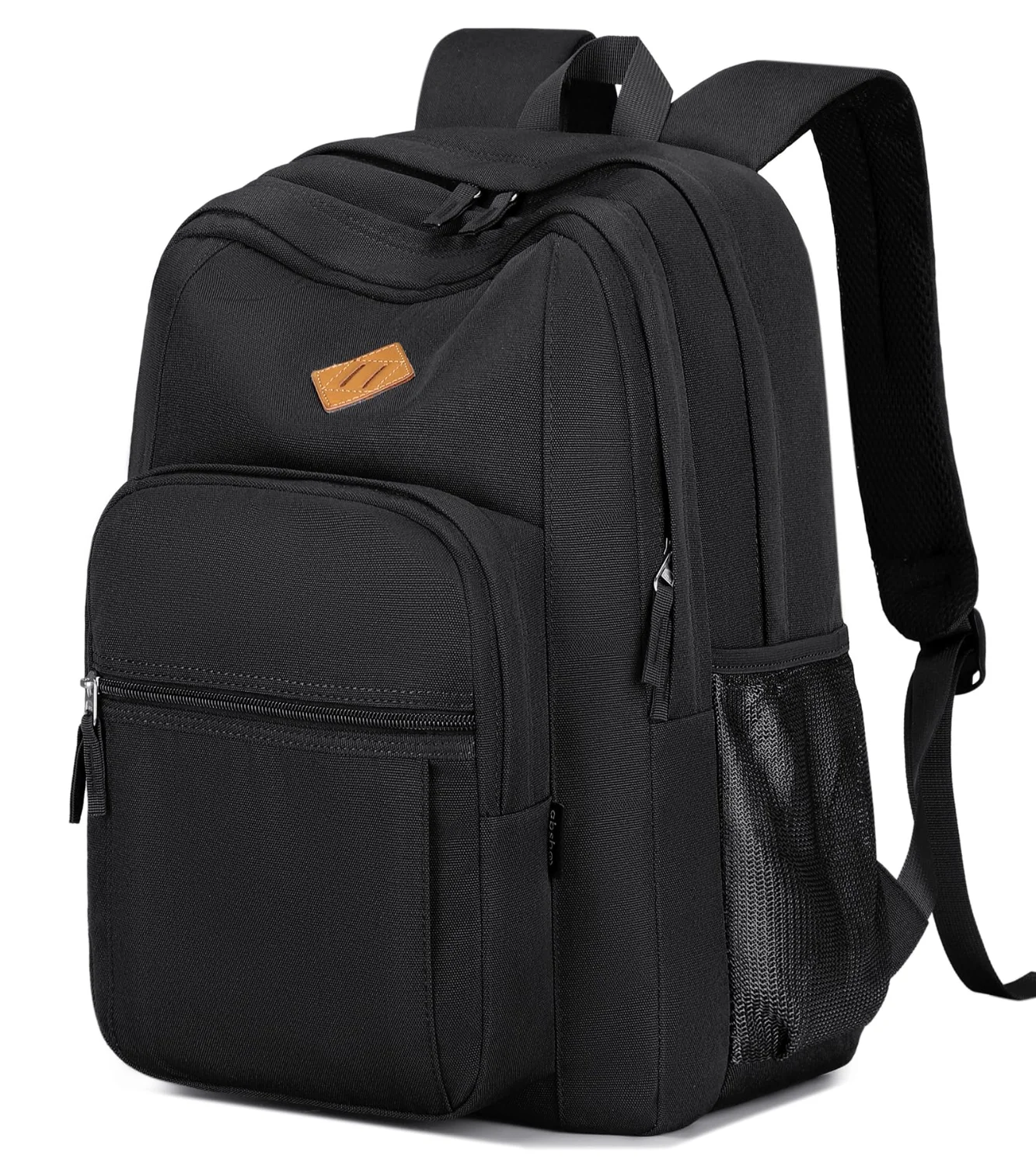
And if a bag is genuinely being asked to carry a day it cannot, the honest answer is that no bag can. Ours will not. The features on the cards here, the chest strap and the padded back and the compartments and the litre figures, are there to carry a sensible load properly, and a bag chosen by the height of the back that carries it will do that for a school year. It is the load that has to give.
More like this is in School Run, and the people at abshoo keeps the whole range one click away on the front page.
This is general information about carrying a school bag, not medical advice. The fifteen per cent figure is a published guideline about a load, not a property of any product, and no strap, panel or belt makes a heavy bag light. A child with persistent back, neck or shoulder pain should be seen by a clinician rather than sold a different bag.